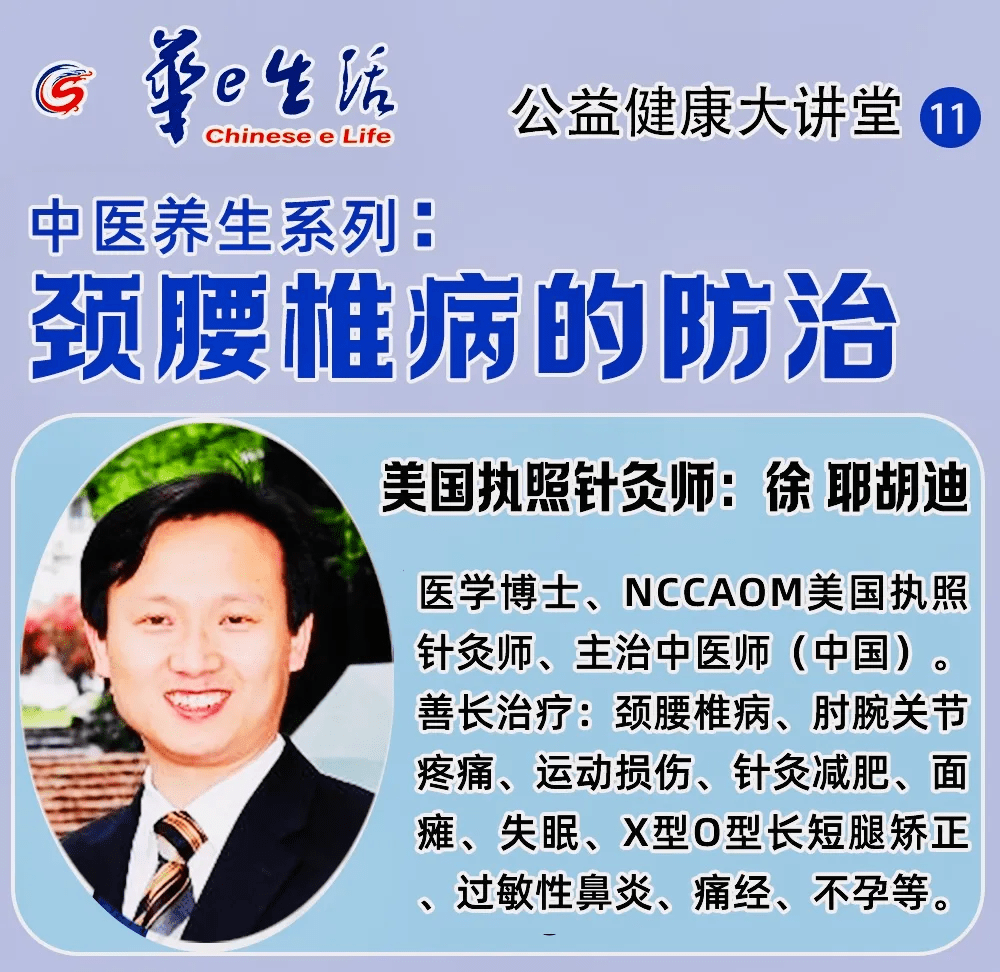
Hello everyone! Welcome to the 11th public health lecture of [Hua e Health Lecture Hall]! I am Yang Qing, the host of the lecture. Today’s topic is the prevention and treatment of cervical and lumbar diseases with traditional Chinese medicine (TCM). The middle part of our body houses an important organ that acts like a spring, called the spine. The spine connects our head and pelvis from top to bottom, enclosing our primary nervous system.
Modern people spend all day sitting, staring at computers, typing on keyboards; or looking down, swiping on phones. These activities put super high, long-term pressure on our spine, in other words, overuse plus misuse. The result is that diseases of the cervical and lumbar spine are very common.
[Hua e Health Lecture Hall] is fortunate to have Dr. Xu Ye Judi, a TCM practitioner with a deep knowledge of traditional Chinese medicine and many years of rich clinical experience, to popularize knowledge on the prevention and treatment of cervical and lumbar diseases.
Dr. Xu graduated from Hubei University of Chinese Medicine and has served as a chief TCM practitioner in China for many years, specializing in the treatment of cervical and lumbar diseases, elbow and wrist pain, sports injuries, and various other diseases. Dr. Xu is now a licensed acupuncturist with the NCCAOM in the United States, and his “He Yi Tang Acupuncture Clinic” is located in Cary, North Carolina, in the Research Triangle area.
Part I
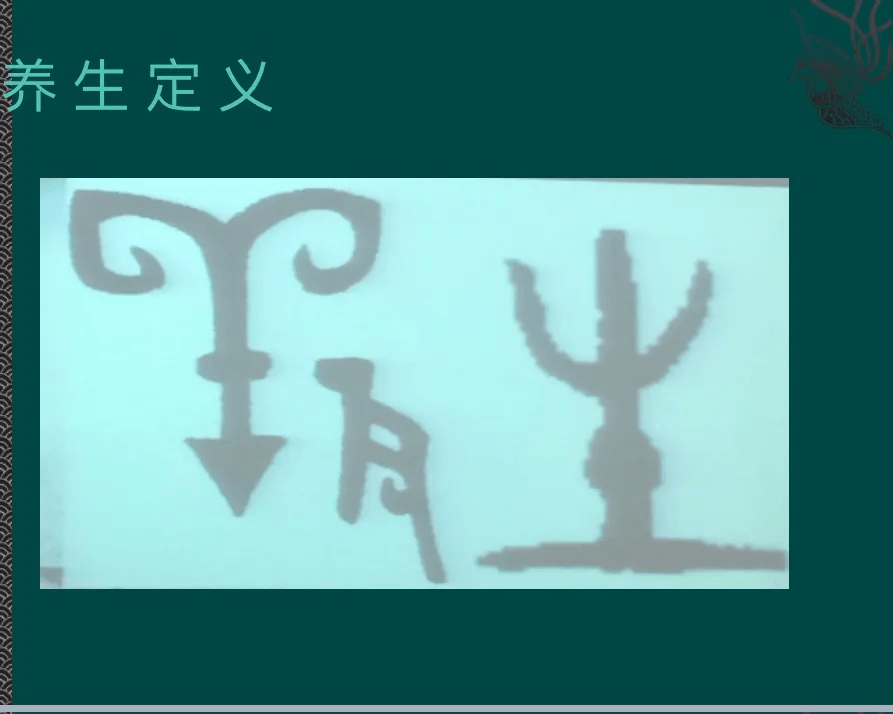
The interesting thing about Chinese is its pictographic characters. The two characters for “health preservation” vividly express what TCM refers to as health preservation. The character for “nurture” on the left looks like a sheep, with what appears to be a hand beside it. Therefore, the oldest definition of health preservation was herding sheep, preventing them from running amok. Health preservation is about following the path of Yin and Yang, achieving harmony between man and nature. Health has its way.
We have manuals for using smartphones and computers. So, do we humans have a manual? We do, but many of us do not understand our manual. What does “life” in health preservation mean? It signifies sprouting from the soil, breaking through the earth, and budding with vitality. Therefore, the purpose of health preservation is to follow the principle of harmony between man and nature to care for our lives, allowing them to grow robustly.
Modern attitudes and approaches to health are: the elderly who have survived major difficulties value health; middle-aged people have no time for health; young people squander their health. The majority of our society cannot be considered healthy. Only 5%-10% of people can be considered healthy. In contrast, 70-80% are sub-healthy, and about 10% or more are in a state of illness. Why are modern people so unhealthy? Dr. Xu provided a detailed explanation from the perspective of TCM. Dr. Xu referenced the classic TCM text “Huangdi Neijing” to give us a clear answer. The “Huangdi Neijing,” dating back about 2000 years, is divided into two parts: “Suwen” and “Lingshu.” It is a product continuously written and updated by generations of medical experts. “Huangdi Neijing” is written in the form of dialogues between the Yellow Emperor and Qi Bo. Dr. Xu recommends that friends who focus on health preservation read the “Suwen” part of the “Huangdi Neijing,” which discusses many medical theories and TCM health preservation methods. Many modern medical experts have found new (healing and health preservation) ideas after reading it.
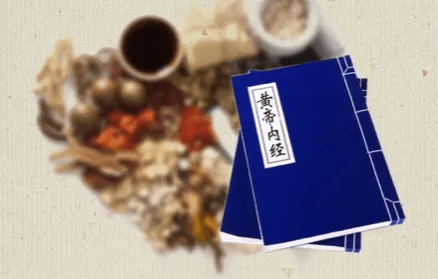
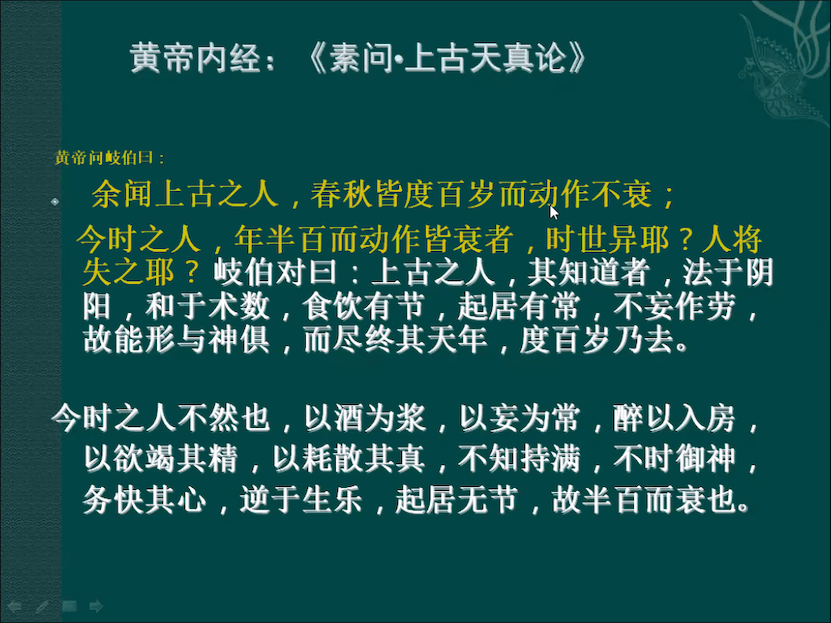
The “Huangdi Neijing” begins with the “Treatise on the Natural Truth of the Ancients,” which discusses health preservation: The Yellow Emperor asked Qi Bo: “I have heard that people in ancient times could live to be a hundred years old without weakening in their activities. Why do modern people become exhausted by the age of fifty?” Qi Bo replied: “Ancient people had regular routines, ate in moderation, did not overwork, and thus their form and spirit were preserved, allowing them to live to a ripe old age of a hundred years.” “Modern people, on the other hand, have irregular routines, indulge in alcohol, seek pleasure, and exhaust themselves to the fullest, quickly depleting their essence and dissipating their true energy, leading to exhaustion by the age of fifty.” Dr. Xu cited an example: He has been a teacher at a university for many years. It used to be a rare event for a student to faint during military training. But now, every year in October during military training for college students, half of them faint because the physical strength of today’s children is declining generation by generation. We have not followed the ancient ways of health preservation, do not understand what Yin and Yang are, and have lost the balance of Yin and Yang. Therefore, our bodies are not as strong as those of ancient people.
Part II
The second part of the lecture addressed how TCM assesses an individual’s constitution, or the state of their body. Dr. Xu pointed out a serious health problem among modern people. The media often reports on celebrities who suddenly die while running or playing sports. This is because they do not know the state of their bodies or follow the principle of gradual progress. They may suddenly feel like playing sports today and then suffer a heart attack while playing. Others may feel like running, but after running, they suffer a heart attack.
TCM teaches you to recognize the body’s warning signs
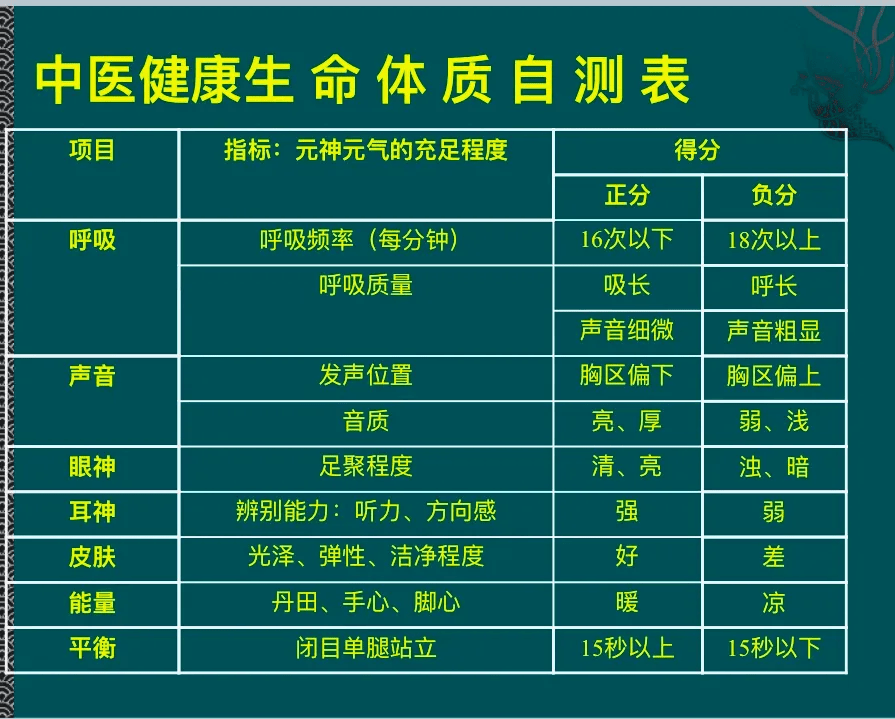
Being able to recognize the body’s seven warning signs is very important for protecting life, whether it’s your own or those around you.
TCM’s methods of observation, smelling, questioning, and pulse-taking provide detailed explanations: assessing the body’s condition through aspects such as breathing, voice, eye expression, ear expression, skin, energy, and balance. This is essentially a TCM physical examination.
Breathing
There’s an ancient Chinese saying, “A person lives on a single breath,” meaning that the initial breath is given by the parents. The infant is connected to the mother through the umbilical cord, receiving breath from the mother. We can see that a child’s breathing area is around the navel. When a child sleeps, their navel will rise and fall. As our bodies age and deteriorate, we find that breathing moves above the navel. In very old age, some people breathe with their chest. When a person dies, they exhale a final breath. Thus, the saying “A person lives on a single breath” refers to this principle.
All health-preserving practices worldwide, whether Tai Chi, yoga, qigong, or various other techniques, share one thing in common: they all involve breathing practice. People who know how to breathe live longer. Opera singers live long, especially those who sing traditional opera. Painters live long; they breathe in slowly, paint calmly, and are at peace. In terms of numbers, breathing less than 16 times per minute is positive; more than 18 times is negative.
People who snore while sleeping definitely have poor health. If we see someone having a heart attack or overexerting themselves, they breathe non-stop.
All practices, when practiced to the end, reveal that their breathing is exceptionally short, powerful, and effective. So, under normal circumstances, we can test our breathing to determine our body’s state. The testing method is straightforward, with two people testing each other. For example, a couple can test each other’s breathing rate per minute.
If your breathing rate exceeds 25 times per minute without exercising, it indicates a pathological state. If you listen to their breathing and it’s very soft, then they fall asleep and snore, this person is in a sub-healthy state, which can easily lead to sudden death. They are prone to sleep apnea syndrome, which can lead to sudden death.
If we are sitting in front of the screen listening to the lecture and take a slow breath, and if your breath can reach your dantian or navel area, then your body is quite good. But if you can’t reach it and feel like it’s just above your stomach, in the chest area, then you are in a sub-healthy state.
Elderly people generally breathe with their chest, so they need to prop up their pillows when sleeping. Because their breath is moving outward, they need a high pillow to flow downward. Thus, there’s an ancient Chinese saying, “Resting on a high pillow without worries,” which actually means the body has deteriorated, fearing sudden death. If they sleep on a low pillow, they may die suddenly. According to TCM, the higher the pillow, the worse the body.
In summary, breathing is the primary indicator of our life quality.
Voice
Voice refers to our vocalization area. If it comes from the dantian area, it means your energy originates from the dantian. It indicates that your body is particularly good. If your voice comes from the throat, your body is in poor condition. Children can cry for more than ten minutes without getting hoarse, while adults become hoarse after a few minutes of crying. Why? Because children have abundant kidney energy, and their voice comes from the dantian. Adults cry using their throat, which quickly wears out. Therefore, adults’ bodies are generally not as good as children’s.
Voice teachers always emphasize sinking the breath into the dantian and vocalizing from there. The same goes for recitation!
Eye Expression
TCM looks at a person’s eye expression. What does eye expression mean? It refers to the focus of the eyes. Clinically, when examining a room, if a patient is near death, our Western doctors will shine a flashlight into their pupils. If the pupils are dilated and dispersed, it indicates the person is nearing death.
When a person has abundant energy, their pupils are focused, and their eyes are particularly spirited, indicating good health.
The UNC student who shot the professor had completely lost his eye expression, indicating definite mental illness. The expression is blurry, not daring to look directly at you, floating everywhere, indicating illness. Our eyes have many relationships with our internal organs. Our liver opens into the eyes, and our essence, energy, and spirit are connected. If our kidney energy is sufficient, our eyes will be bright and energetic.
How to tell if a man’s body is in good condition? Look at whether his eyes are bright. How about a woman? Men show their nobility through spirit, and women through blood and energy. In other words, to judge whether a woman’s body is in good condition, in addition to her eye expression, you also need to look at whether her face has blood color. If a woman’s face is pale without blood color, her body is not very good. We know that spirit is Yang, and blood is Yin, so a woman must have blood, nourish Yin, and her skin will shine. When a woman’s body is very poor, her face will turn yellow, and eventually, she will develop spots.
Ear Expression
The ability to distinguish sounds, hearing, and sense of direction.
Skin The color of the skin. When the body is in good condition, the skin is smooth, shiny, and elastic. When our blood and energy wither, our skin is in poor condition, dull, pale, and sallow.

Energy
TCM divides people into upper, middle, and lower burners. The upper burner includes our head, heart, and lungs. The middle burner is our spleen, stomach, liver, and gallbladder. The lower burner includes our kidneys, large intestine, small intestine, and bladder.
When the upper burner’s energy is sufficient, the palm is warm. When a person’s palm is cold, it means their upper burner is very cold, and their energy is very low. Such people are prone to respiratory system diseases.
The middle burner is located around our navel. When someone’s navel area is cold, it indicates their spleen and stomach are in poor condition. A very poor spleen and stomach mean the stomach is uncomfortable and not in good condition.
The lower burner is our foot’s sole. A cold sole indicates weak kidney energy. So, where should we supplement energy? Pay attention! We say energy flows from bottom to top. Heat moves from bottom to top, not from top to bottom.
Supplementing energy is simple. Soaking feet in hot water is a way to supplement energy. Especially for the elderly, if you feel your energy is insufficient, what should you do? Soak your feet. Soaking your feet before bed, you will find that when your liver and kidney energy are very full, you will sleep very comfortably.
Balance (Yin and Yang) When our Yin and Yang are balanced, our energy and breathing, and our body are in a balanced state, we can stand on one foot with our eyes closed for more than 15 seconds, indicating our body is in good condition. You can test yourself. If you can stand for more than 15 seconds, it indicates your body is very good. If you can only stand for a few seconds, it means your body is in poor condition, Yin and Yang are imbalanced, and your body is in a sub-healthy state needing adjustment.
Part III
The third part of the lecture introduced traditional TCM healing and health care methods. TCM is a unique treasure of the Chinese nation. It has a long history, is profound, and has unique features. Of course, what belongs to a nation also belongs to the world.
Acupuncture in TCM has been in the United States for over 50 years. Americans, especially wealthy Americans, really like seeing TCM doctors. Unfortunately, Dr. Xu found that Chinese people in the United States generally do not understand TCM well and, of course, do not make good use of it. In fact, acupuncture in TCM is included in American insurance. We should all know and understand this!
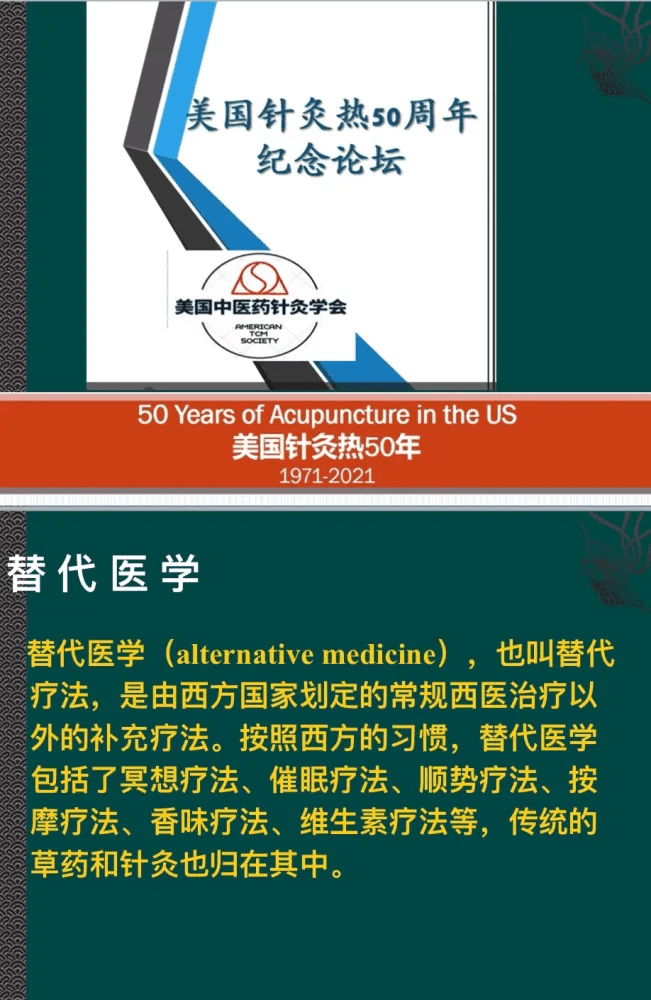
TCM and Western medicine differ significantly. Western medicine treats symptoms, while TCM emphasizes treating the root cause and preventing disease. TCM and other healing and health maintenance methods are categorized as alternative therapies. Both TCM and Western medical treatments have their limitations but also complement each other. Therefore, they are increasingly recognized and favored.
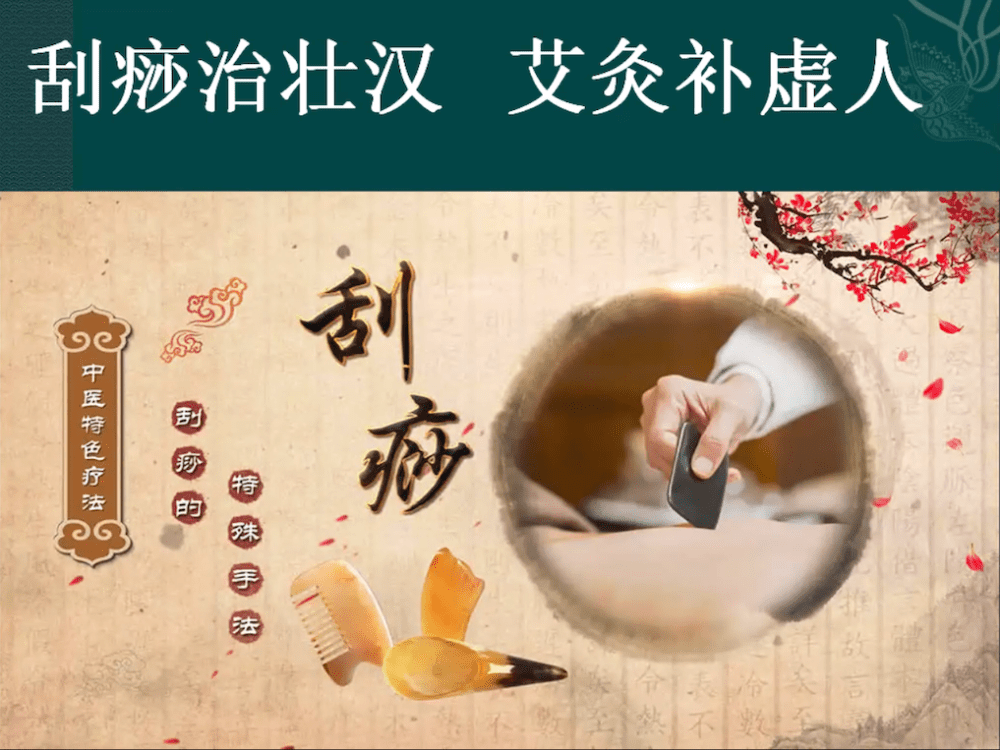
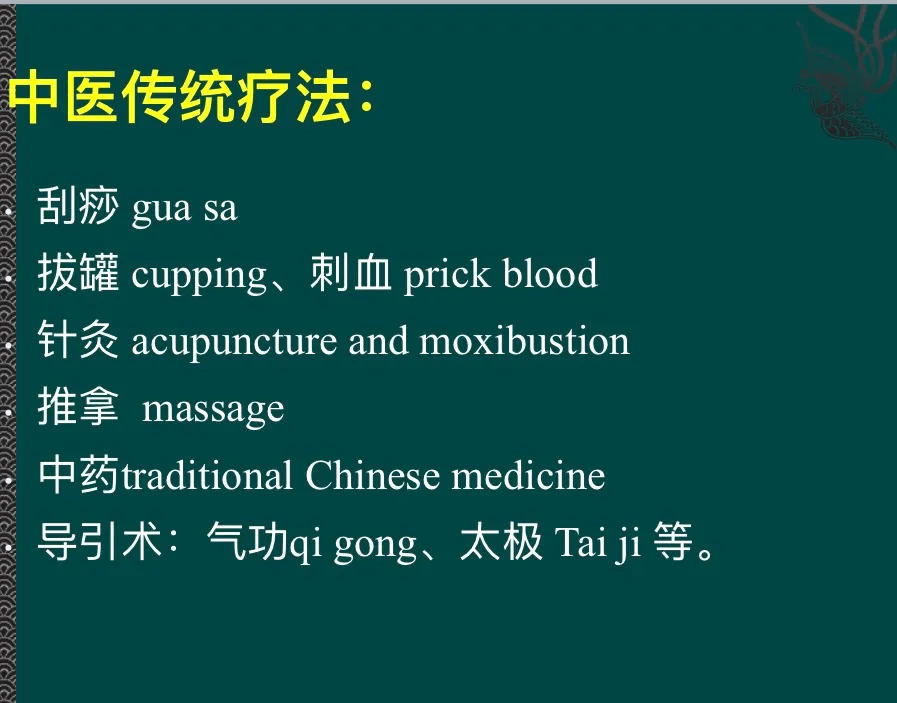
Scraping (Gua Sha)
In TCM, scraping is called a purging method. Traditionally, for example, if someone has heatstroke, a real heat condition, scraping can cure it immediately. TCM says, “Moxibustion supplements the deficient, scraping treats the robust.” Meaning moxibustion supplements those who are particularly deficient, and scraping should not be used in such cases but rather moxibustion therapy.
Scraping tools are varied and easy to use. You can use a buffalo horn comb, a coin, or a soup spoon for scraping, which is very convenient.
Sometimes scraping is combined with bloodletting for treatment. More detailed examples are discussed below.
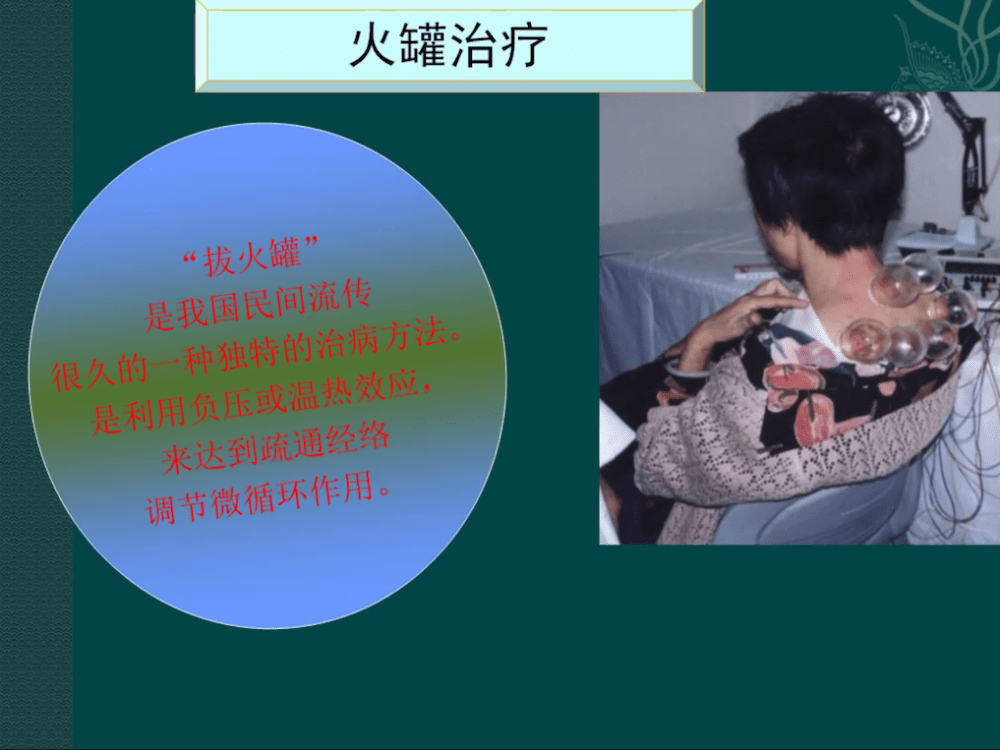
Cupping
Cupping is a unique and long-standing method of treating diseases in Chinese folk medicine. It belongs to TCM’s traditional external treatment methods.
Cupping can promote qi and blood circulation, dredge meridians, reduce swelling and pain, and eliminate wind and dampness. Because it is simple and effective, it has become a common method of disease prevention and treatment in folk medicine. It is often used to treat back pain, neck and shoulder pain, rheumatic pain, stiff neck, colds, indigestion, insomnia, menopausal syndrome, and some skin diseases, among others.
For example, in our clinic, for women with breast swelling and hyperplasia during menstruation, cupping combined with back scraping can quickly reduce hyperplasia.
Activate blood circulation to remove stasis and relieve pain in the treatment of cervical spine disease (explained below).
Modern medicine believes:
- Cupping can cause congestion and rupture of capillaries in patients, leading to autolysis, thereby promoting the production of histamine and histamine-like substances. These substances are transported throughout the body, stimulating the organs and thereby enhancing the body’s disease resistance.
- Cupping can cause local vasodilation, promoting cellular tissue metabolism and blood circulation.
- Cupping also enhances the circulation of lymph fluid in the body and promotes gastrointestinal motility.
- Cupping can accelerate the elimination of metabolic products from muscles and various organs, speeding up detoxification.
- Cupping can regulate the function of the nervous system by stimulating the patient’s skin receptors and vascular receptors.
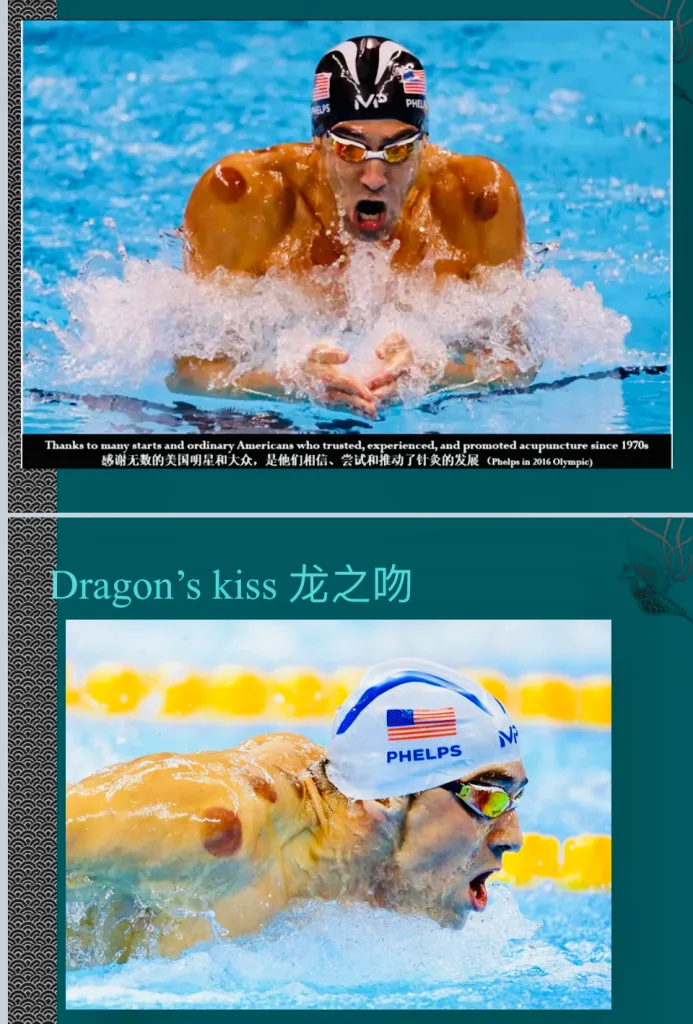
American swimming star Michael Phelps used TCM cupping to help eliminate severe dampness formed from years of swimming. Curious reporters asked him about the red marks on his body. He replied: “Kisses from a dragon!” In fact, the negative pressure in hot cups draws out the cold evil from the body, which has a pain-relieving effect.
Acupuncture: Acupuncture + Moxibustion Acupuncture is a unique innovation of TCM. It later spread to Japan, where it was highly favored. About 1100 years ago, the Japanese emperor issued a national decree on moxibustion, requiring citizens to “apply moxibustion in spring and autumn to prevent disease.” This measure significantly strengthened the physical constitution of the Japanese people, enabling the military to invade foreign lands later.
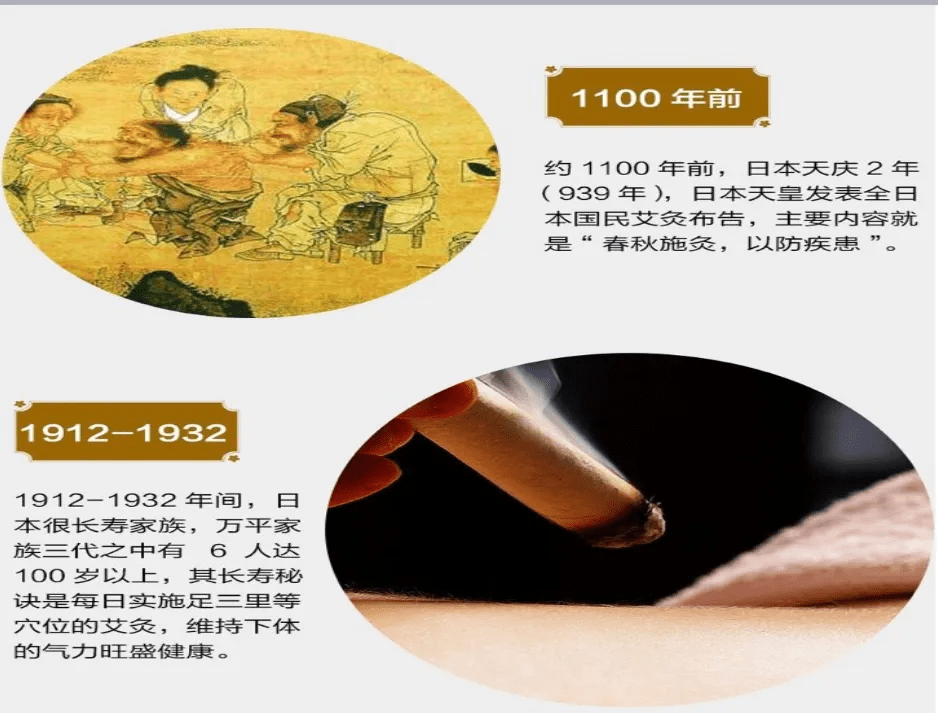
According to records, the famous long-lived Wanping family in Japan had six people reach over 100 years old within three generations. Their secret was daily acupuncture on the Zusanli acupoint. Research shows that moxibustion on the Zusanli acupoint can enhance immunity, inhibit gastric acid secretion, promote the healing of gastric ulcers, stimulate hemoglobin production, and treat anemia, among other benefits. Celebrities use acupuncture for beauty. It can make the skin glow.

Someone asked Dr. Xu about the difference between dry needling used by American physical therapists and TCM acupuncture. Dry needling adopts the principle of acupuncture but uses thicker needles, causing patients much pain and suffering.
Massage
Massage, also known as tuina, differs from massages found in stores. TCM massage has therapeutic effects. However, massages outside also relax muscles and invigorate blood circulation, making people feel relaxed and comfortable.
Chinese Medicine
Chinese medicine is a vast and rich treasury of knowledge, a treasure passed down through thousands of years of Chinese civilization. “Not proficient in acupuncture, not divine; not skilled in medicine, not enduring,” combining needles and medicine can achieve lasting healing.
Guiding Techniques: Qigong and Tai Chi Qigong and Tai Chi are complete systems of TCM knowledge and healing wisdom. Practicing Tai Chi is an excellent method for humans to extend their lifespan! Many Americans have discovered the benefits of TCM and love it very much. It’s a pity for Chinese people not to know about these. Due to limited lecture time today, more details will be introduced in the future.
Part IV
The fourth part of the lecture discussed the treatment and prevention of cervical and lumbar diseases.
Symptoms of Cervical Spine Disease
Symptoms include numbness in the cervical spine, headaches, soreness, stiffness, and limited range of motion in the neck. Pain can be very intense, occasional, progressive, or sudden, with radiating pain to the head, arms, back of the hands, shoulders, buttocks, legs, feet, and abdomen. It can lead to insomnia, dizziness, nausea, vomiting, and limb numbness.
It used to be said that cervical spine diseases occur at 40, shoulder diseases at 50, lumbar diseases at 60, and leg diseases at 70. However, these diseases now tend to occur earlier, with clinical cases of teenagers and people in their twenties suffering from cervical spine diseases. Modern people’s cervical spines age particularly fast, with cervical spine diseases being very common at 40. This is closely related to our modern lifestyle.
A normal spinal image
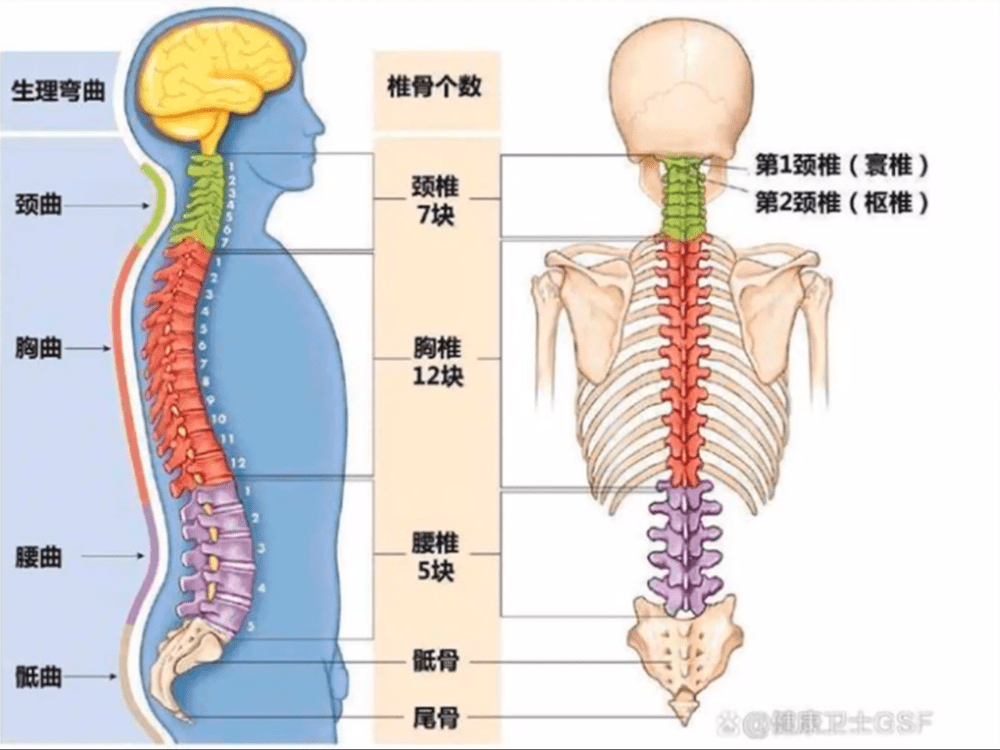
As shown in the image, a normal spine has physiological curvature, called the cervical curve. The spine encloses the main nervous system. The neck has seven vertebral bodies, enclosing eight cervical nerves. For example, when your hand is cut, the nerve conduction signal tells the brain that your hand is cut, bleeding, and in pain.
The lumbar spine is the waist part of the spine, consisting of five vertebral bodies. It also has a certain physiological curvature. More details will be discussed later.
- Cervical Spine Disease
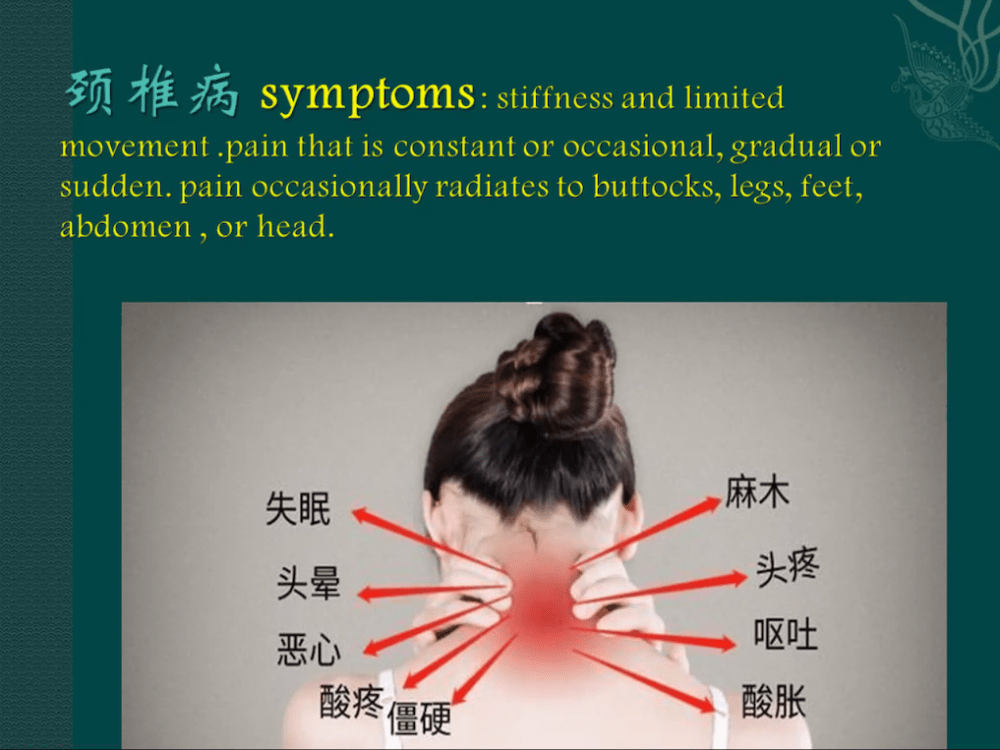
Modern people spend all day looking down at their phones, working long hours at desks, and staring at computer screens, causing the cervical spine to lose its natural ecological curvature, becoming straight and deformed. This leads to obstructed blood flow, compression of the nervous system, pain, numbness, and muscle spasms and stiffness.
Types of Cervical Spine Diseases Cervical spine diseases are divided into six types: cervical type, accounting for 60%; nerve root type, radiating pain; spinal cord type, which can lead to stroke; vertebral artery type, sympathetic nerve type, and mixed type. Their clinical symptoms and characteristics can be seen in the table below. TCM discusses their causes and mechanisms.

Spinal cord type cervical spine disease can lead to urinary incontinence, one side of the face feeling hot and the other cold, and may require surgical intervention in some cases.
Here’s a special reminder for everyone: Many people regard cervical spine disease as a minor issue and neglect treatment, but it can lead to a series of diseases, including trigeminal neuralgia (WHO recommends treating with TCM acupuncture), facial paralysis caused by cervical spine disease; driving with cervical spine disease, suddenly becoming blind, and causing car accidents. Cervical nerve compression leading to insufficient blood supply to the brain, affecting vision.
Cervical spine disease can also lead to untreatable gliomas, related to cervical spine compression. Modern people have a high incidence of this. Some strokes are also caused by cervical spine disease leading to vascular stenosis and blockage. Some “pharyngitis,” feeling like there’s phlegm in the throat that can’t be spit out, is actually caused by cervical spine disease. Once the cervical spine disease is treated, the symptoms immediately disappear.
Causes and Mechanisms
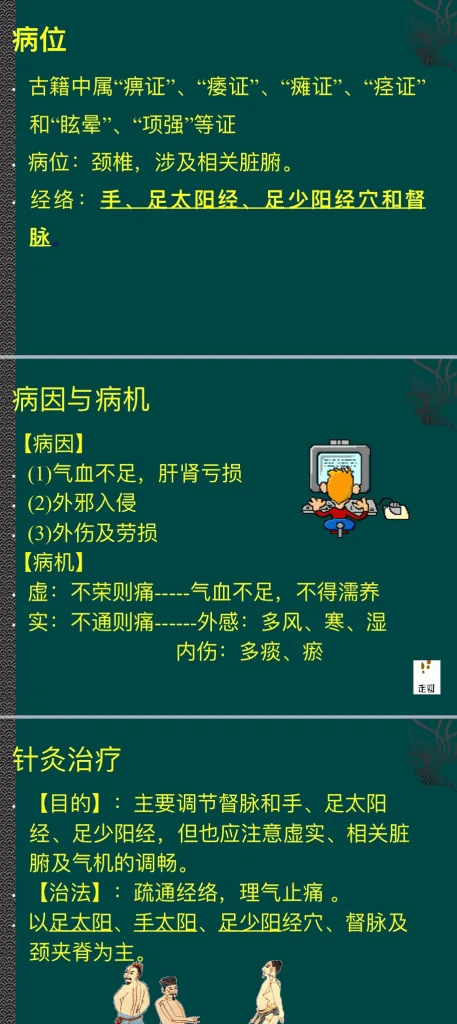
Causes include insufficient qi and blood, lack of nourishment. Liver and kidney deficiency, invasion by external pathogens, trauma, and overwork. The mechanism includes “deficiency”: pain due to lack of nourishment—insufficient qi and blood, not receiving nourishment. “Excess” means pain due to obstruction, external factors: mainly wind, cold, damp; internal damage: mainly phlegm, stasis. TCM acupuncture treatment is very effective. The treatment focuses on dredging meridians, regulating qi, and relieving pain. It mainly uses acupoints on the foot’s Taiyang, hand and foot Taiyang meridians, foot Shaoyang meridian, the Governor Vessel, and the neck’s Jiaji. It also uses combinations to treat different symptoms. For example, if there’s numbness in the upper limbs, add Quchi, Zhongzhu, and Shousanli.

The main acupoints for TCM treatment of cervical spine disease, also known as selected points, include Fengchi, Tianzhu, Dazhui (can treat colds, high blood pressure), etc. For example, for a stuffy nose, use moxibustion to fumigate. Allergic rhinitis, in fact, is an untreated cold. Moxibustion on Dazhui acupoint removes dampness and cold. Ashi points, which are pain points, are treated wherever there’s pain. Who is prone to cervical spine disease? Those with a “triple-bent neck.” Young people are prone to stiff necks. The reason is that the neck and shoulder muscles are in a state of excessive tension for a long time, leading to pain and limited movement upon waking.
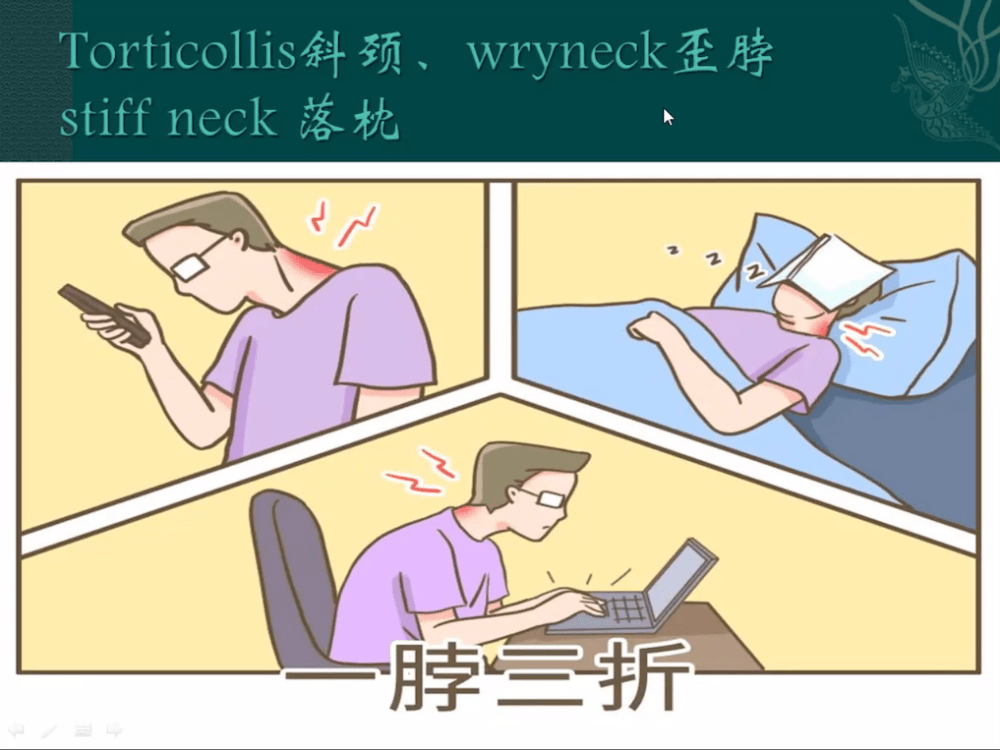
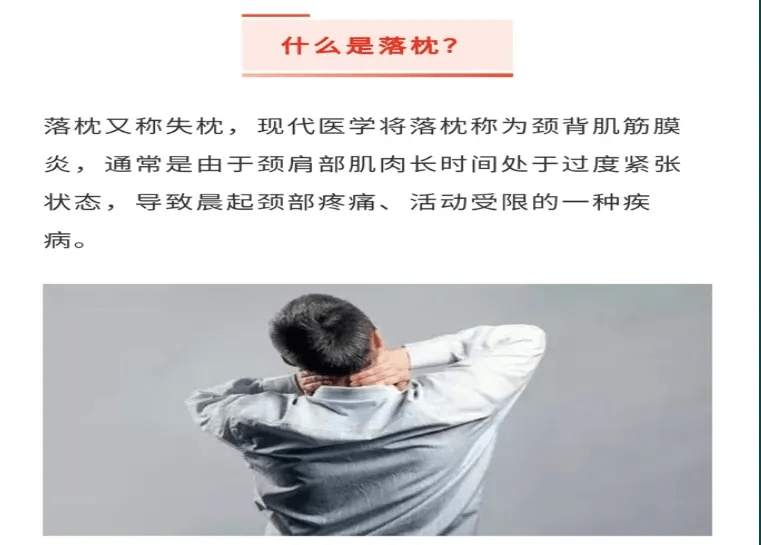
TCM believes that spinal diseases are preventable and treatable. The earlier the treatment, the easier the recovery.
To prevent cervical spine disease, Dr. Xu provides suggestions:
- Dr. Xu warns everyone to protect their necks in air-conditioned rooms during the summer. Entering an air-conditioned room in summer, you can wear a thin scarf or a collared shirt to prevent wind, cold, and damp evils from entering.
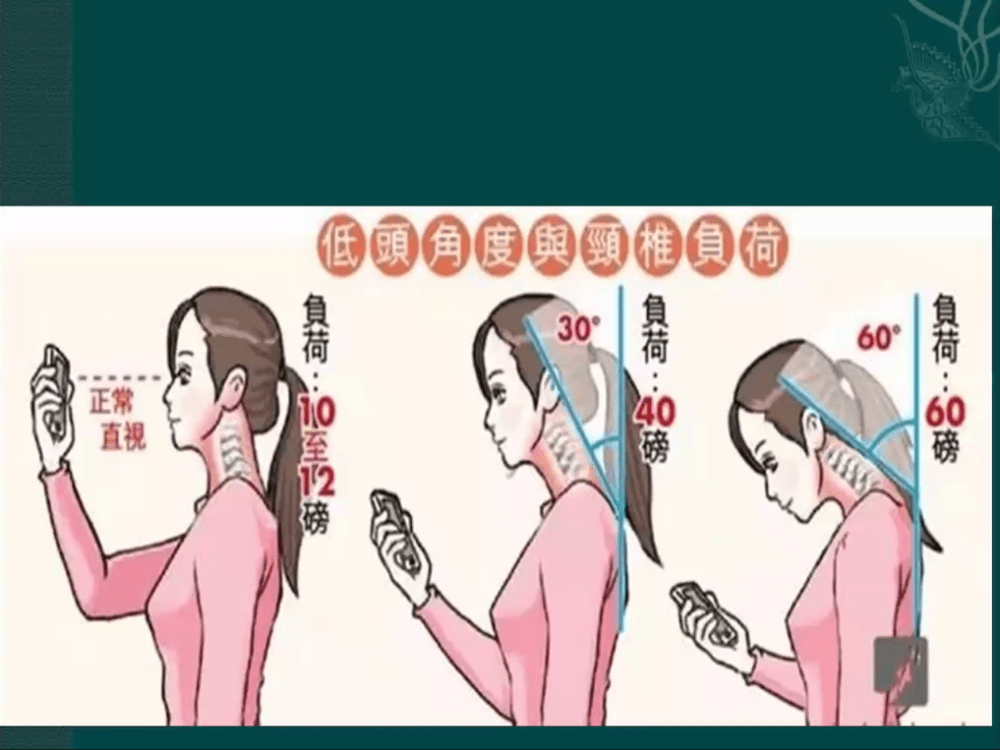
- Frequently consciously lift your head. For example, look up at the sky while walking. You can also place your TV higher than your line of sight at home, which helps protect the cervical spine. Long-term looking down at phones, hunching over screens, lying down reading books, etc., can cause cervical spine inflammation and cervical spine disease. See the image.
- A good pillow is very important for preventing cervical spine disease. The neck area needs support. Traditional Chinese buckwheat pillows are very good, and people had fewer cervical spine diseases back then.
The correct way to look at a phone: Looking straight ahead is the best posture.

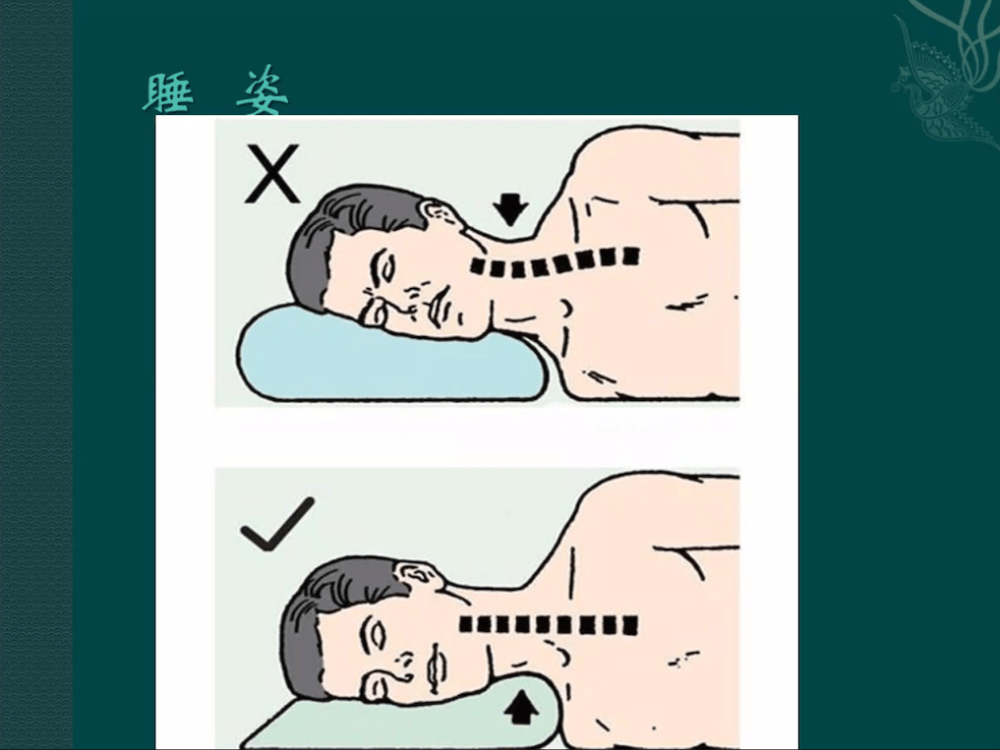
Shoulder periarthritis belongs to cervical shoulder syndrome, fifty shoulders. It’s especially painful at night. TCM acupuncture is very effective. It can solve the problem in a few sessions.
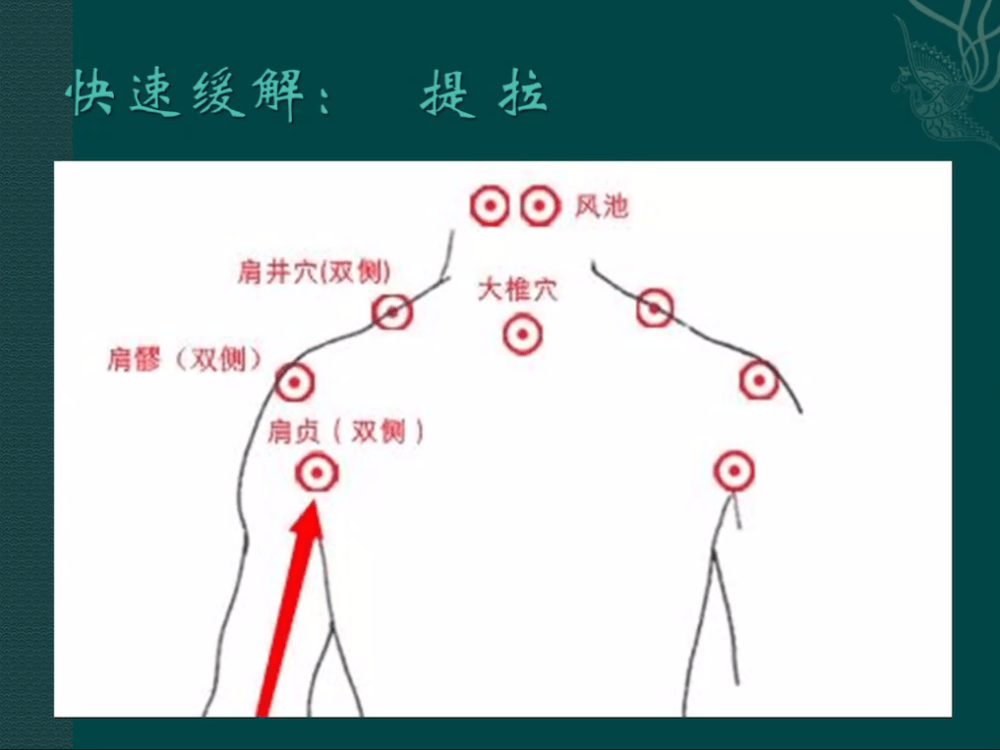
Teaching you TCM massage to quickly relieve cervical spine disease TCM can quickly relieve symptoms by massaging and kneading various acupoints. In these acupoint areas, rub, grab, hold for 5-6 seconds, then release, and repeat several times to achieve rapid relief.
- Lumbar Spine Disease
Very common, around 60 years old. Americans’ waists are especially prone to problems because Americans sleep on very soft beds. Lumbar pain generally has three parts. The first part’s pain is due to lumbar muscle strain, lumbar disc herniation, sprains, and contusions. The middle type is lumbar pain radiating to the leg. There’s also a single line of pain. There’s also sciatica.

Causes Lumbar disc herniation has many causes, simply put, external and internal causes. External causes include trauma and chronic overwork. Cold and damp stimulation. Internal causes are actually degenerative changes. Everyone will have symptoms, some without symptoms, meaning if you maintain it very well, that is, both sides of the muscles and fascia age symmetrically, without causing tension, then there are no symptoms. Those with symptoms are due to various reasons, asymmetric aging on both sides, causing tension, compressing nerves, leading to pain and inflammation.

Lumbar spine disease can lead to paralysis, female urinary incontinence, male impotence, etc. The internal cause is the anatomical weak point of humans. After humans began to walk upright, the lumbar muscles are most prone to injury. Moreover, the lumbar muscles are internal organs, invisible and untouchable from the outside.
If acupuncture can reach the lumbar muscles, about 90% of lumbar problems can be solved. If someone around you can’t get up in the morning or is paralyzed, before calling 911, if you can call our clinic, we can come to treat them. It might be possible to make them stand up immediately without needing 911, possibly just a few acupuncture needles, a few punctures, and a simple manual reset might make them stand up.
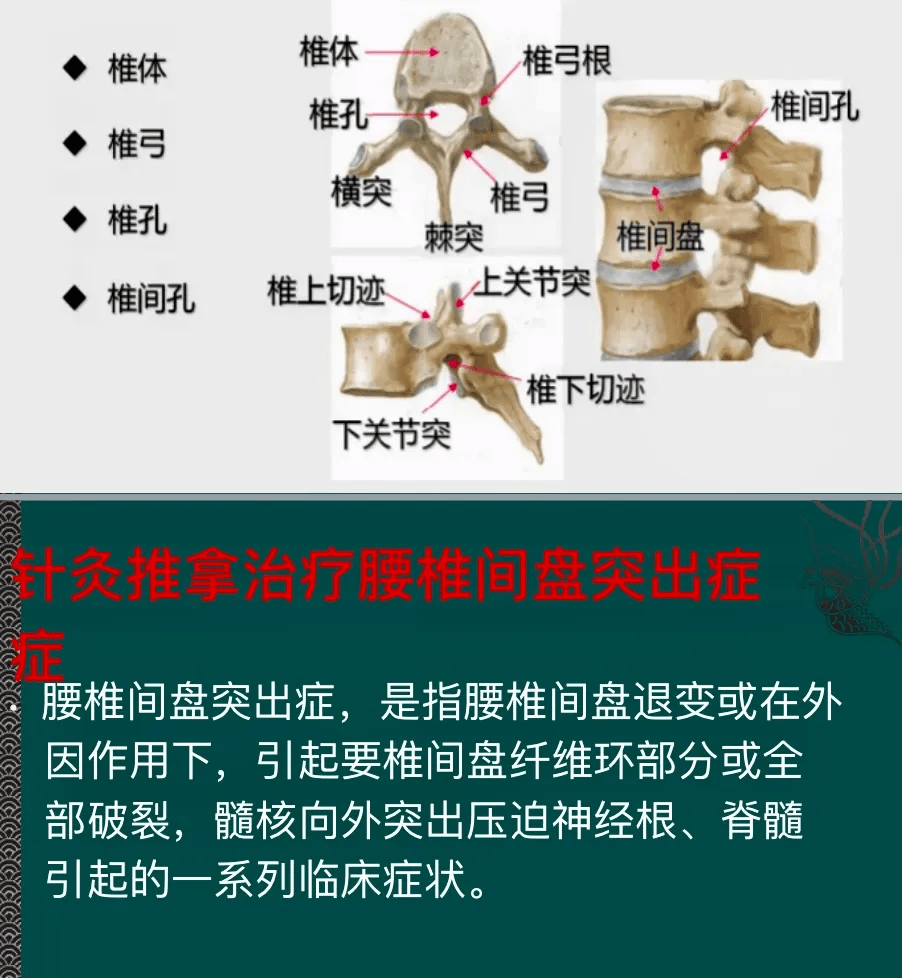
Symptoms
Our lumbar spine has five vertebral bodies. These five vertebral bodies are stacked like tiles, one ring on top of another. When you hold something in your hand, all your strength is on these five lumbar vertebrae, which are most prone to damage. After damage, what symptoms are there? The first is deep buttock pain. It can be pulling, cutting, or jumping pain, with a sense of constriction. Pulling pain gradually radiates down along the sciatic nerve. There’s also numbness on the outer side of the calf, a feeling of heaviness in the perineum. Movement is limited, the affected lower limb cannot be straightened, and there’s a feeling of leg shortening. One leg longer, one leg shorter is called “long and short legs.” TCM can completely correct this for everyone. Including if your child has long and short legs, high and low shoulders. With acupuncture and massage methods, it can be corrected without surgery, a green therapy method. Some people walk like ducks due to lumbar spine damage, which TCM can also correct. Green therapy! Lumbar movement disorders, numbness, the affected side’s leg feels cold. If the disease course is long, generally, the patient might need surgery.
TCM Treatment—Nourishing the Kidneys In TCM, there’s an acupoint called Mingmen, which is on the back opposite the navel. There are two acupoints next to it called Kidney Shu. We say the kidney governs bones. All bone problems are caused by kidney deficiency, according to TCM. Aging starts when kidney qi is deficient, kidney essence is deficient, because our human kidney essence comes from two aspects. One is congenital, that is, if your parents are healthy, your congenital kidney qi is sufficient, and your body is good. The second comes from acquired food and drink, that is, the qi and essence of the food and drink we eat, which means if your spleen and stomach are good, your kidneys will be good. A good spleen and stomach mean you can eat, drink, and sleep well. Illustration: There are many causes of lumbar pain, the most common being kidney deficiency, wind-cold-damp invasion, labor injuries, and trauma. The kidney governs bones. TCM treatments include nourishing the kidneys and yang, dispelling wind and dispersing cold and dampness, relaxing muscles and relieving urgency, opening meridians and relieving pain. TCM treatment for lumbar spine uses acupoints including Mingmen, Kidney Shu, Lumbar Yang Pass, Large Intestine Shu, Ashi points. Ashi points are not fixed and correspond to commonly mentioned pain points.
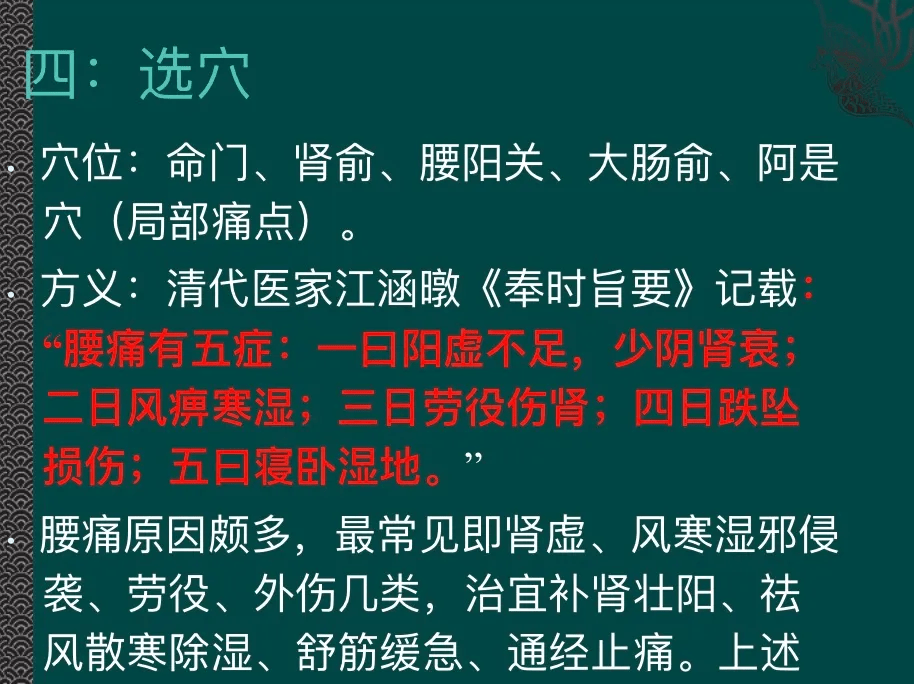
The Qing dynasty medical experts spoke well, saying there are five types of lumbar pain. The first is yang deficiency and insufficiency, and Shaoyin kidney failure. Kidney failure means pain for a day or two, generally belonging to wind-cold-damp. Lumbar pain for more than three days generally results from labor injuries damaging the kidneys. The most painful is generally due to injury. If it’s painful for five days, then dampness is very heavy, dampness is heavy, living on the ground floor or the first floor is prone to cold and dampness. Lumbar pain has many causes, but the most common is kidney deficiency. Then wind-cold-damp invasion, labor injury, trauma, etc. Generally, we in TCM nourish the kidneys, so you see nourishing the kidneys is the most in TCM. Incorrect sitting posture can also lead to lumbar spine disease.
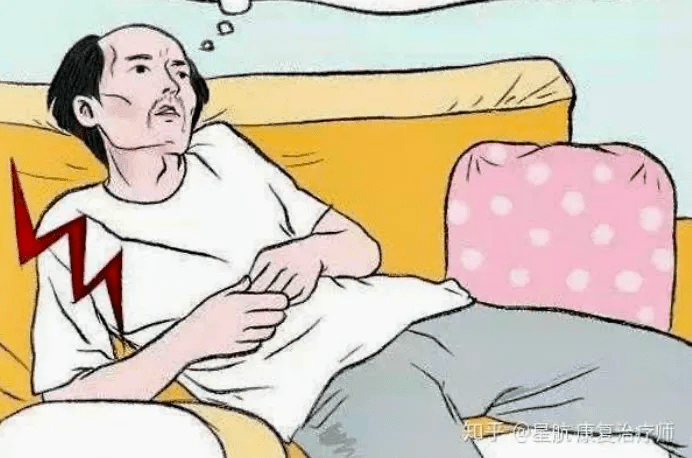
Slouching and crossing legs greatly harm the lumbar spine. If the lumbar spine is asymmetrical for a long time, it will lead to uneven buttocks and one leg longer than the other. TCM says this is imbalance. Correcting it, returning to a balanced state, is called health preservation. Dr. Xu recommends protective movements for the waist People who sit in the office for a long time, drive for a long time, work on computers for a long time, have a few movements that can help you recover your lumbar spine.
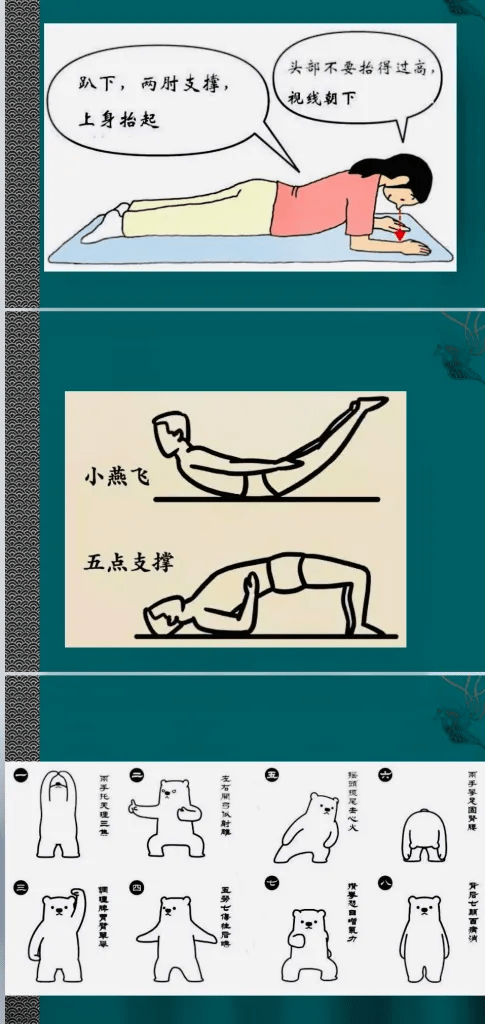
The first is the baby crawl. Lie down like a baby, with your stomach touching the bed or board. This helps your waist return to its natural curve. Because we bend our waist during the day, straightening the waist this way is very effective. Lie down for a few minutes, five minutes. You can choose to do it on a yoga mat or flat board, or even on your bed if it’s not as soft as an American bed.
The second is what yoga also calls the flying swallow pose.
Another is the five-point support. Two feet, two arms, plus the head supporting the body. This is generally possible for young and strong people, but not for the elderly. The elderly can’t do the five-point support.
Note: If you have waist problems, seek medical advice promptly, and do not perform the above-described actions on your own. The above is only for preventive measures. First recommendation: Eight Brocades Practice daily to safely transition through middle and old age.
Hold the heavens with both hands to regulate the Triple Burner. Lift both hands from below upwards.- Draw the bow left and right as if shooting eagles. Open the shoulders wide and try to stretch the neck towards the direction of the drawing hand.
- Regulate the spleen and stomach with one arm raised.
- Look backward for relief from the five strains and seven injuries.
- Shake the head and wag the tail to remove heart fire.
- Clasp the feet with both hands to strengthen the kidneys and waist. Touch the waist, then move downwards. Bend over to regulate the spleen and stomach.
- Clench the fists and glare to increase strength.
- Seven vertebrae shakes behind to dissipate hundreds of diseases. This stimulates the Kidney Meridian of Foot-Shaoyin at the heel. It is known that the kidney generates marrow and governs the bones.
- Some people say they can’t perform the Eight Pieces of Brocade, but actually, doing just a few movements can be effective. Don’t start by trying to harmonize your vital energy; just mimic the movements. Success starts with imitation. Dr. Xu emphasizes: Nurturing life is about maintaining balance. Transitioning from one state of balance to another requires a transition period. Maintaining balance is the best way to nurture life. People who have smoked for decades can suddenly develop lung cancer if they quit smoking abruptly. Hence, when transitioning from one state of balance to another, it’s crucial to have a transition period. For example, someone who sleeps during the day and works at night might struggle to adapt to a reversed schedule. There’s a time for transition, so there are no definitive answers in nurturing life. Having a routine is key. This routine should suit you personally. This is the essence of Traditional Chinese Medicine: finding and establishing your own routine. When asked “What’s the best thing to do for nurturing life?” some find longevity in practicing Tai Chi, others in playing sports, swimming, or painting. Ultimately, whatever suits you and maintains your balance is the best. For more information, scan the QR code to watch more videos by Dr. Xu.
Dr. Xu’s “He Yi Tang Traditional Chinese Medicine Clinic” appointment hotline: 984-3630509 Address: 1601 Walnut Street Suite 102, Cary, NC 27511 Postscript by Dr. Yang Qing: Traditional Chinese Medicine (TCM) is a profound accumulation of thousands of years of Chinese wisdom and experience. Dr. Xu Yehudi, who has extensive clinical and teaching experience in both Chinese and Western medicine and holds a license from the NCCAOM in the United States, has discovered that our overseas Chinese community knows very little about TCM and even uses it less than Americans, which is regrettable. TCM has unique aspects in health maintenance, prevention, and treatment of degenerative diseases and in promoting longevity, which are worth our exploration and use. Although I have a keen interest in TCM, my knowledge is limited. After attending the lecture, I felt enlightened, as if “listening to you for a moment is better than reading books for ten years.” Many points made during the lecture are very practical and can be directly applied. We can also consult TCM practitioners, letting the ancient wisdom of TCM contribute to our modern lives. We encourage everyone to continue paying attention to our public health lectures for more wisdom on health maintenance, disease prevention, and treatment. 【Hua e Health Lecture Hall】accompanies you on the path to health. Edited by Dr. Yang Qing, Drs. Yang Health and Beauty Studio
 HYT TCM